Selecting the Right Post Hole Digger for Sustainable Agriculture
Choosing the right post hole digger is crucial for efficient and sustainable farming. The ideal digger depends on your farm's size, soil type, and budget. Three main types exist: auger diggers (tractor-mounted), hydraulic diggers, and manual diggers. But how do you choose the best option for your operation? What are the key differences in their environmental impact? For more information on tractor-mounted options, check out this helpful resource.
Auger Diggers: Power and Potential for Soil Compaction
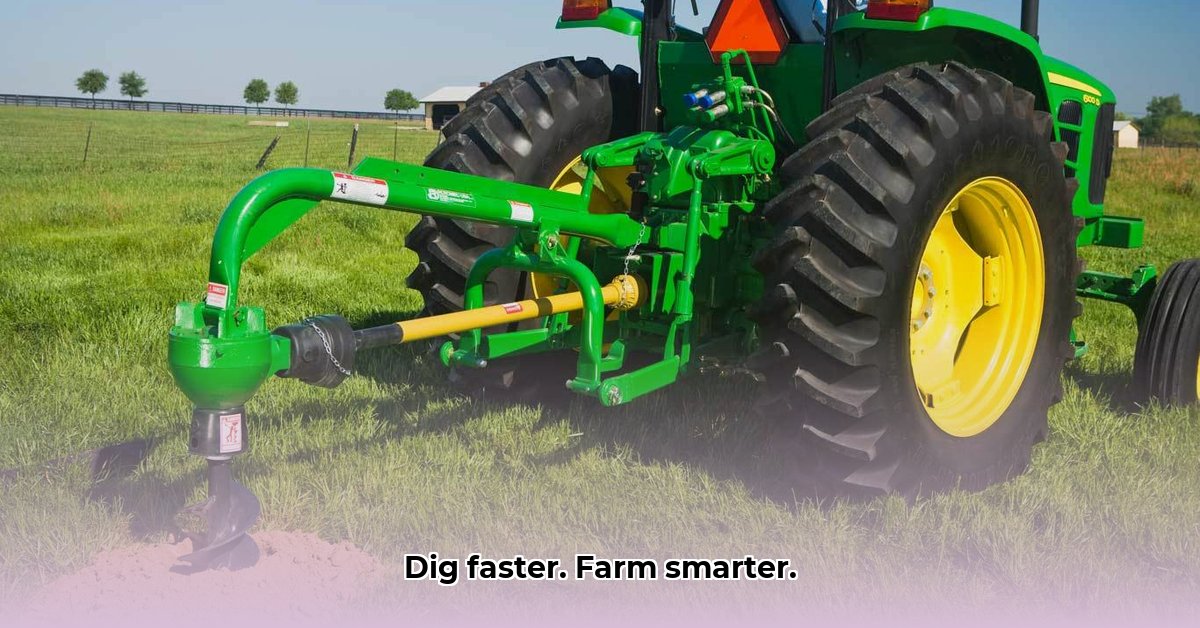
Auger diggers, typically tractor-mounted, excel in speed and efficiency, especially for large-scale projects. They quickly create numerous post holes, significantly reducing labor. However, their potent power comes with trade-offs. "Auger diggers are very effective for large-scale projects, but their high power can lead to soil compaction if not used carefully," says Dr. Emily Carter, Soil Scientist at the University of California, Davis. This compaction negatively impacts water infiltration and root growth, potentially harming soil health. Furthermore, fuel consumption is generally higher than other options.
- Pros: High speed, large capacity, suitable for diverse soil types.
- Cons: High fuel consumption, high potential for soil compaction, significant initial investment.
Hydraulic Diggers: Versatility and Fuel Efficiency
Hydraulic diggers strike a balance between power and precision. They are more fuel-efficient than auger diggers, offering considerable control and adaptability to varying soil conditions. "Hydraulic diggers give you excellent control over the digging process," notes John Miller, Agricultural Engineer at Purdue University Extension. This versatility makes them suitable for a wide range of tasks beyond simply digging post holes. However, their initial cost tends to be higher than manual diggers.
- Pros: Moderate power, good control, better fuel efficiency than augers, versatile applications.
- Cons: Higher initial cost than manual diggers, potential for soil compaction (though less than auger diggers).
Manual Diggers: Low-Cost, Labor-Intensive Choice
Manual diggers represent the most budget-friendly option, perfect for small-scale projects or tasks requiring precision in delicate environments. They are environmentally friendly, requiring no fuel. However, they demand considerable manual labor, making them unsuitable for larger operations or challenging soil conditions.
- Pros: Low cost, low environmental impact, precise digging.
- Cons: Labor-intensive, slow, unsuitable for tough soils or large-scale work.
Optimizing Digging Practices for Maximum Efficiency and Sustainability
Regardless of the digger type, efficient digging techniques are crucial. Does improper technique impact soil health and digger longevity? Absolutely.
1. Pre-Digging Preparation: Thoroughly clear the area of rocks, debris, and large roots to protect your digger and ensure consistent hole depth. Preparation time saved is time well spent.
2. Consistent Depth and Spacing: Maintain consistent hole depth and spacing to ensure structural stability, optimize planting, and minimize soil disturbance.
3. Adjust Auger Speed: Adjust the auger speed to the soil's consistency. Slower speeds are necessary for harder soils to prevent damage to the auger and excessive compaction.
4. Minimize Passes: Avoid unnecessary passes over the same area to reduce soil compaction. One well-executed pass is more sustainable than several clumsy ones.
5. Post-Drilling Measures: After digging, carefully backfill the hole with the appropriate material before installing the post to ensure stability.
6. Regular Maintenance: Regular lubrication, sharpening of the auger, and proper storage are essential for extending the digger's lifespan and preventing costly repairs.
Calculating Your Return on Investment (ROI) and Minimizing Environmental Impact
Investing in any farm equipment requires careful consideration of its cost and long-term benefits. This is no exception. When calculating the ROI of a post hole digger, consider:
- Labor Costs: Compare the time and cost of manual digging versus mechanized digging. For large-scale projects, the savings can be substantial.
- Fuel Costs: Account for fuel consumption, particularly for auger and hydraulic diggers. Choose lower emission options if your budget allows.
- Maintenance Costs: Budget for repairs, sharpening parts, and potential replacement components.
- Initial Investment: Weigh the initial cost against the potential long-term savings in labor, time, and potentially, fuel.
Beyond financial ROI, consider the environmental impact. Look for diggers made from recycled or sustainably sourced materials. Choose the least powerful digger appropriate for your tasks, and minimize soil disturbance in your digging practices. The environmental benefits, from reduced fuel consumption to healthier soil, can be significant. Furthermore, incorporating your post-hole digger into broader sustainable farming practices like agroforestry and precision farming helps create a more holistic and environmentally responsible approach to your operations.
Choosing the right post hole digger and using it efficiently contributes to a more sustainable and profitable farming operation. Consider the key factors outlined above to make an informed decision that benefits both your bottom line and the environment.